
Michigan Building Code Requirements for Fire Growth and Smoke Propagation Control
When designing, constructing, or renovating a building in Michigan, one of the most important safety considerations is controlling fire growth and smoke propagation. The Michigan Building Code (MBC) sets strict performance requirements for interior finishes and decorative materials to ensure that buildings provide a safe environment for occupants in the event of a fire. These requirements address how materials react to flame spread, flame propagation, and smoke development.
This article explains the provisions of the Michigan Building Code regarding interior finish and decorative material performance standards, the test methods used to evaluate them, and the criteria based on occupancy classification.
Purpose of Interior Finish and Decorative Material Requirements
The Michigan Building Code recognizes that the type of interior finishes and decorative elements used in buildings can have a major impact on fire growth, smoke production, and life safety. Interior wall, ceiling, and decorative materials can act as fuel sources during a fire, contributing to flame spread and toxic smoke release.
To minimize these hazards, the Code establishes performance criteria for flame spread index (FSI) and smoke development index (SDI). By restricting the types of finishes and decorations allowed in different occupancies, the Code ensures that fire does not spread rapidly and that smoke is controlled to allow safe evacuation.
Key Performance Requirements
1. Flame Spread Index (FSI)
The flame spread index measures how quickly flames move across the surface of a material. The Michigan Building Code uses the following classifications, tested in accordance with ASTM E84 – Standard Test Method for Surface Burning Characteristics of Building Materials or UL 723:
-
Class A: FSI 0–25 (most fire-resistant)
-
Class B: FSI 26–75
-
Class C: FSI 76–200
Class A materials are required in the most hazardous occupancies or exit passageways, while Class B or C materials may be permitted in less restrictive occupancies.
2. Smoke Development Index (SDI)
In addition to flame spread, the smoke development index is critical. Excessive smoke impairs visibility, hampers evacuation, and poses toxic hazards. Under Michigan Building Code provisions, the SDI must not exceed 450 for most interior finish applications, regardless of the flame spread classification.
3. Occupancy-Based Requirements
The Code sets stricter requirements depending on the occupancy classification of the building. Examples include:
-
Assembly occupancies (theaters, auditoriums, churches): Interior wall and ceiling finishes must typically be Class A or Class B to reduce fire risk where large numbers of people gather.
-
Educational occupancies (schools, daycares): Class A or Class B finishes are required in exit access corridors and exit enclosures to protect children and staff during evacuation.
-
Institutional occupancies (hospitals, nursing homes, detention facilities): Class A finishes are generally required in corridors and exit passageways due to limited mobility of occupants.
-
Business and residential occupancies: May allow Class C finishes in certain rooms but typically require Class B or better in exit corridors.
Decorative Materials and Trim
Beyond permanent finishes, the Michigan Building Code also regulates decorative materials such as curtains, draperies, hangings, and holiday decorations. These must be:
-
Flame-resistant or treated with flame-retardant chemicals.
-
Tested in accordance with NFPA 701 – Standard Methods of Fire Tests for Flame Propagation of Textiles and Films.
-
Limited in quantity so that they do not create an excessive fire hazard.
Trim and moldings, if combustible, are also subject to restrictions and must not exceed 10 percent of the wall or ceiling area to limit fuel contribution to a fire.
Testing Standards for Compliance
To ensure compliance, the Michigan Building Code references well-established fire test standards, including:
-
ASTM E84 / UL 723: Flame spread and smoke development.
-
NFPA 286: Evaluates contribution of interior finishes to room fire growth.
-
NFPA 701: Flame propagation for decorative materials and fabrics.
By requiring these standardized tests, the Code provides measurable benchmarks for manufacturers, builders, and inspectors to confirm the fire safety performance of materials.
Why Compliance Matters
Meeting the Michigan Building Code requirements for interior finishes and decorative materials is essential for:
-
Protecting occupant safety by reducing fire spread and smoke hazards.
-
Ensuring code compliance during inspections and permitting.
-
Reducing liability risks for builders, contractors, and property owners.
-
Enhancing fire resistance in both residential and commercial properties.
Failure to comply can result in violations, fines, delays in occupancy approval, and—most importantly—greater risk to human life.
Conclusion
The Michigan Building Code sets clear and strict performance requirements for controlling fire growth and smoke propagation through the use of approved interior finishes and decorative materials. By adhering to criteria such as the flame spread index, smoke development index, and NFPA testing standards, builders and designers can ensure that their projects meet safety standards while protecting building occupants.
Whether you are working on a new construction project, a renovation, or interior design, always verify that your chosen finishes and decorative materials comply with the Michigan Building Code. Safe material selection is not only a legal requirement but also a critical step in creating buildings that protect lives in the event of fire.


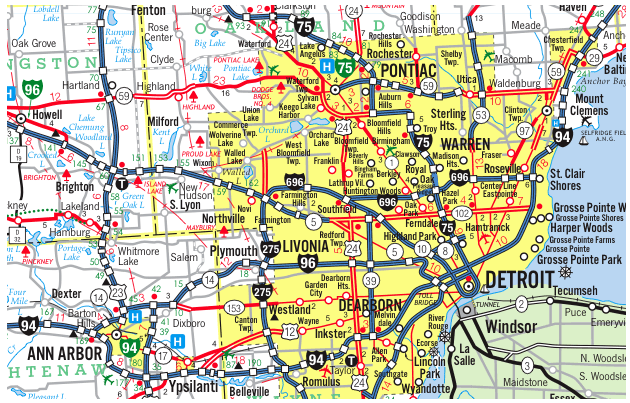 Our Construction company is Servicing Southeast Michigan, Detroit and the Tri-County area Wyane, Oakland and Macomb;
